Over the past few decades, many countries have experienced significant demographic changes, particularly through increasing life expectancy and declining fertility rates. In New Zealand, the proportion of the population aged 65 and over has steadily increased, while fertility rates have remained below the replacement level. This report examines the impact of population aging on healthcare demand in New Zealand, supported by data analysis and an international comparison with South Korea, aiming to explore the scale of the issue alongside its policy implications and potential strategies for long-term system sustainability.
While these demographic trends reflect positive developments such as improved healthcare and living standards, they also introduce new structural challenges for modern societies. This demographic shift is gradually transforming New Zealand's population structure, leading to a higher dependency on a shrinking working age population. As a result, pressures on public systems — especially healthcare and pension systems — are expected to intensify over time.
Importantly, population aging itself is not inherently problematic. Rather, the challenge lies in how well existing systems adapt to these changes. Experiences from other countries, such as South Korea, demonstrate how rapid demographic transitions can lead to increased fiscal pressure and declining public trust in social systems, particularly among younger generations.
While population aging is a natural outcome of increased life expectancy, it presents significant challenges when demographic changes occur faster than systems can adapt. In New Zealand, the growing proportion of older adults is expected to place increasing pressure on healthcare services, particularly in the management of chronic and long-term conditions.
Older populations tend to have higher healthcare utilisation rates compared to younger groups. This includes more frequent hospital visits, longer treatment durations, and a greater need for ongoing care. As the population ages, the demand for healthcare services is projected to rise substantially, potentially exceeding current system capacity.
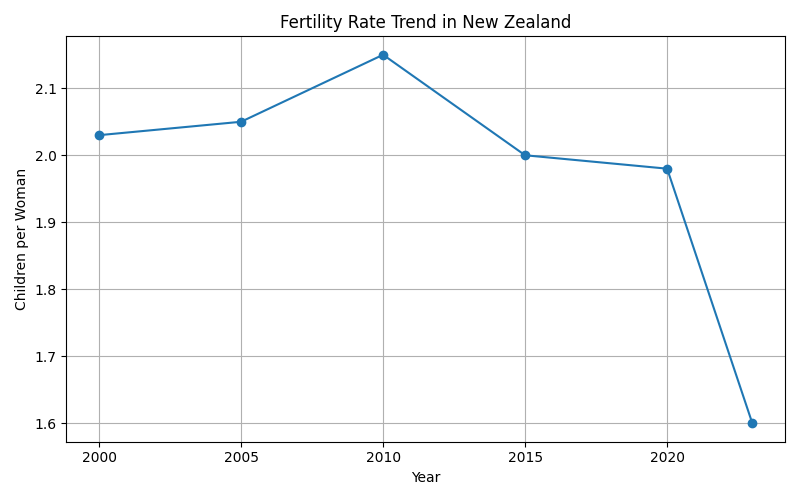
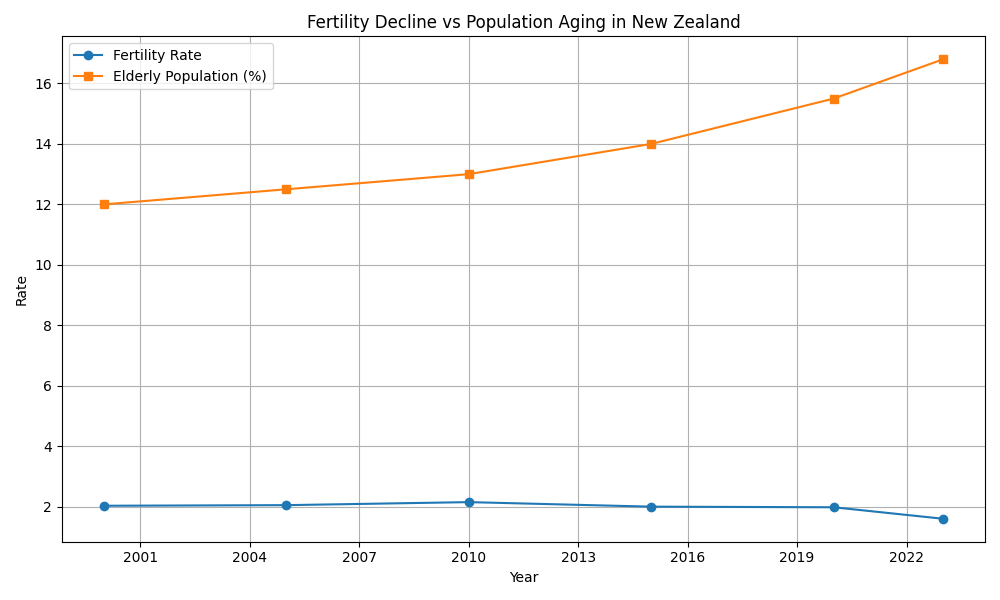
Declining fertility rates contribute to a shrinking working age population, which forms the primary tax base supporting public healthcare systems. This creates a structural imbalance, where fewer contributors are required to support a growing number of service users. According to Stats NZ, the total fertility rate has remained well below the replacement level of 2.1 births per woman for over a decade, with recent estimates around 1.5–1.6.
If these trends continue without sufficient policy adaptation, New Zealand may face increasing healthcare costs, workforce shortages, and reduced system efficiency. The challenge, therefore, is not the aging population itself, but whether the healthcare system can sustainably respond to these demographic shifts.
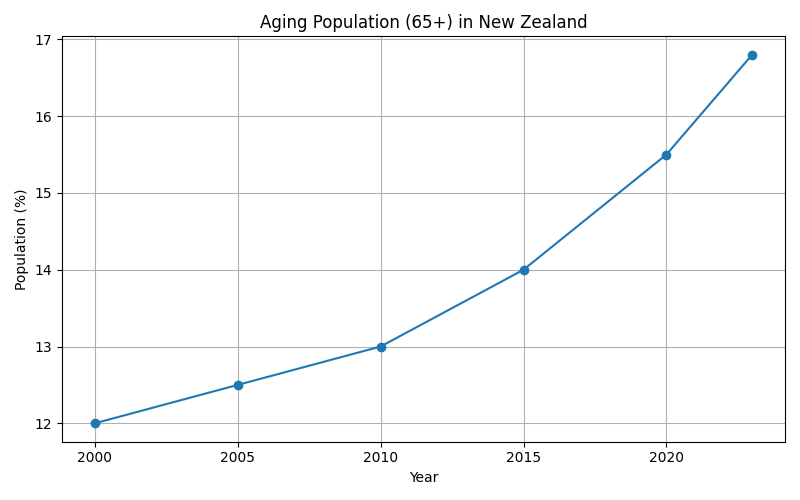
Data from Stats NZ shows that older adults accounted for approximately 12% of the population in the mid-2000s, rising to over 15% in recent years, and projected to exceed 20% in the coming decades. This shift reflects both increased life expectancy and long-term fertility decline. This demographic trend is further illustrated through the old-age dependency ratio, which measures the number of older individuals relative to the working-age population. According to projections from the OECD, New Zealand's dependency ratio is expected to increase significantly over the next few decades, indicating a growing burden on the economically active population.
Healthcare utilisation patterns also differ substantially by age. Reports from the Ministry of Health indicate that older populations are more likely to require hospital services, long-term care, and chronic disease management. This suggests that population aging will not only increase the number of healthcare users, but also the intensity and cost of care required.
Taken together, these data points provide strong evidence that New Zealand's healthcare system will face increasing demand in the future, driven by both demographic structure and age related health needs. Left unaddressed, the combination of a shrinking tax base and rising healthcare intensity could compound faster than current policy settings anticipate.
South Korea provides one of the clearest examples of how rapid population aging and declining fertility can create structural pressure on public systems. South Korea currently has one of the lowest fertility rates in the world, recording approximately 0.72 births per woman in 2023, far below the replacement level of 2.1. At the same time, life expectancy remains high, accelerating the transition toward an aged society.
These demographic changes have placed growing pressure on the country's pension and healthcare systems. With fewer young workers entering the labour force, a shrinking contributor base is expected to support a rapidly expanding elderly population. This has raised concerns over the long-term sustainability of the National Pension Scheme, including debates over higher contribution rates, delayed retirement ages, and reduced future benefits.
An equally important consequence has been declining trust among younger generations. Surveys reported by major Korean media outlets indicate that many young adults doubt whether they will receive fair benefits relative to the contributions they are required to make — a broader issue of intergenerational imbalance in which younger taxpayers feel they are financing a system from which they may receive less support in the future.
For New Zealand, South Korea's experience offers an important warning rather than a direct comparison. New Zealand is not currently facing the same level of demographic pressure. However, similar long-term trends — lower fertility, rising life expectancy, and a growing elderly population — suggest that comparable fiscal and social challenges could emerge if policy responses are delayed. Early intervention may therefore be essential to preserve both system sustainability and public confidence.
Addressing the challenges associated with population aging requires a comprehensive and balanced policy approach. No single solution is sufficient, as the issue is deeply rooted in economic, social, and demographic structures. Strategies should include:
Family-Friendly Policies: Supporting higher fertility through improved access to affordable childcare, expanded parental leave, and addressing housing affordability. Evidence from the OECD suggests that countries with strong social support systems tend to experience relatively higher fertility rates.
Managed Immigration: Maintaining a well-managed immigration system that attracts skilled workers, allowing New Zealand to partially offset the decline in the working-age population and reduce pressure on public systems.
Healthcare System Efficiency: Shifting from a reactive model to a preventive and community-based approach, with investment in early intervention, chronic disease management, and digital health technologies to reduce hospitalisation rates.
Fiscal Sustainability: Carefully balancing expenditure with available resources as projections from the New Zealand Treasury indicate rising long-term fiscal pressures.
Public Trust: Ensuring transparent communication, gradual policy adjustments, and fair distribution of costs and benefits across generations, as the South Korean case demonstrates how perceptions of unfairness can undermine confidence in public systems.
Population aging represents one of the most significant demographic transitions facing modern societies, including New Zealand. While it reflects positive developments such as increased life expectancy and improved living standards, it also introduces complex challenges for healthcare systems, public finances, and labour markets.
This report has shown that the key issue is not aging itself, but the ability of existing systems to adapt to changing demographic conditions. Evidence from New Zealand highlights rising healthcare demand, increasing fiscal pressure, and a shifting population structure, while the experience of South Korea demonstrates how delayed policy responses can lead to broader challenges, including declining public trust and intergenerational imbalance.
Ultimately, the challenge of population aging is not purely economic or demographic — it is also social and political. By taking early and coordinated action across family policy, immigration, healthcare efficiency, and fiscal planning, New Zealand can better navigate the transition and build a more resilient and inclusive system for the future.